

Acacia floribunda
Gossamer Wattle
Photo of Acacia floribunda - Gossamer Wattle
No photo for the moment for Acacia floribunda - Gossamer Wattle

Please note: You must be the owner of the posted photo and it must not be copyrighted.
Things You Must Knows cannot be held responsible for photos posted in violation of this rule
Common Name:
Flower color:
Foliage color:
GreenSun (From 0 to 5):
Water (From 0 to 5):
Maximum temperature:
Minimum temperature:
Gossamer Wattle (Acacia floribunda) - Description
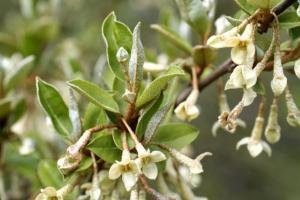
Acacia floribunda is a perennial evergreen shrub or tree. It is native to New South Wales, Queensland and Victoria, but is cultivated extensively, and has naturalised in South Australia, Tasmania and Western Australia, and also in Indonesia, Mauritius and northern New Zealand. Common names for it include Gossamer Wattle, Grossamer Wattle, Weeping Acacia and White Sallow Wattle. It grows up to 6m in height, but there is a commercial form available which only grows to about 1m tall. Its cream-colored flowers occur in the early Spring (August to September in the southern hemisphere).
Gossamer Wattle (Acacia floribunda) - Blooming
Flowers form in early to midwinter and some species have very fragrant flowers.
Gossamer Wattle (Acacia floribunda) - Growth
Acacias are native to warm regions of the world and do best with full sun. Size varies depending on the variety. The shortest, Acacia redolens, generally varies between 1' and 6' tall, with a spread of up to 15'. The tallest variety, Acacia koa, can reach heights and spreads of up to 60'.
Gossamer Wattle (Acacia floribunda) - Planting
Few nurseries carry more than just a handful of Acacia species, but they are easily propagated via self collected seed. They can also be grown from cuttings and grafting.
Gossamer Wattle (Acacia floribunda) - Pest
Pest infestation and damage is rarely a problem.
Gossamer Wattle (Acacia floribunda) - Interesting facts
Acacia is indigenous to warm regions like Mexico and Australia. They attract birds and work well in multiple climates. They are generally used in landscaping. Acacia seeds are often used for seasoning food and drinks, and are listed as ingredients in Barq's root beer and Altoids mints. The species Bullhorn acacia lacks the bitter alkaloids usually located in the leaves that defend against insects and animals. Bullhorn acacia ants fulfill that role. They lives in its hollowed out thorns at the base of their leaves and protect the tree and in exchange live off the protein rich nodules (Beltian bodies) and nectar from the glands on its leaf stalk. There is no other known function of these Beltian bodies than to feed the ants. The aggressive ants release an alarm pheromone that livestock smell and avoid. The ants will also "prune" seedlings around it to prevent them from block out sunlight, which the Acacia's need to survive.
Gossamer Wattle (Acacia floribunda) - Soil and irrigation
They require little to no water, and will basically grow in any soil that is not too wet.