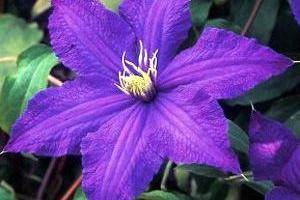


Alcea rosea 'Nigra'
Hollyhock
Photo of Alcea rosea 'Nigra' - Hollyhock
No photo for the moment for Alcea rosea 'Nigra' - Hollyhock

Please note: You must be the owner of the posted photo and it must not be copyrighted.
Things You Must Knows cannot be held responsible for photos posted in violation of this rule
Common Name:
Plant Type:
Foliage color:
GreenSun (From 0 to 5):
Water (From 0 to 5):
Maximum temperature:
Minimum temperature:
Maximum height:
Maximum width:
Hollyhock (Alcea rosea 'Nigra') - Description
The Hollyhock, Alcea rosea 'Nigra', provides a novelty color that really stands out in the garden. 'Nigra' has deep chocolate-maroon, single flowers which are produced on strong stalks opening from bottom up for a continuous display of new flowers for weeks.
Hollyhock (Alcea rosea 'Nigra') - Blooming
Will flower in late spring or early summer. Those planted in winter may not flower during their first year: initial planting in fall will prevent this. Blooms 5-petaled, funnel-shaped flowers in tall, slender inflorescences.
Hollyhock (Alcea rosea 'Nigra') - Growth
Biennials and short-lived perennials. Hollyhock will germinate in between five and ten days. They do best in full sun. Adding mulch around the plant will help ensure annual regrowth for several years after the initial planting. Stake plants once they reach 3 feet in height. Works well in a mixed border or along a wall. Plants attract butterflies and bees.
Hollyhock (Alcea rosea 'Nigra') - Planting
Cover seeds lightly with a disease-free medium. Pots or bedding should be deep, since hollyhocks have taproots that penetrate deep into the soil. They do best next to building foundations or other barriers, since these protect against damage due to wind. Should not be planted in areas with deep-penetrating winter frost.
Hollyhock (Alcea rosea 'Nigra') - Pest
Slugs can cause damage. Puccinia malvacearum, also called Hollyhock Rust, can be problematic after summer flowering, though some newer varieties are resistant to the disease. Infected debris should be removed from the proximity of the plant, since the disease can endure the winter and attack again during the next season.
Hollyhock (Alcea rosea 'Nigra') - Interesting facts
Although Hollyhock may have no medicinal uses in modern times, the plants were used in antiquity to solve a myriad of health issues. Pharmacists would use extracts from Hollyhocks to cure sore throats, treat STDs, relieve burns and even promote milk production for new mothers.The word "Hollyhock" originates from the plant's origion: "holy" and "hoc" meaning "holy mallow". It was named the holy mallow since it was brought back to England by the Crusaders.Thomas Jefferson grew a variety of Hollyhock known for its dark purple flowers.
Hollyhock (Alcea rosea 'Nigra') - Soil and irrigation
Hollyhock plants need regular irrigation. Does best in moderately fertile, soil with good drainage.