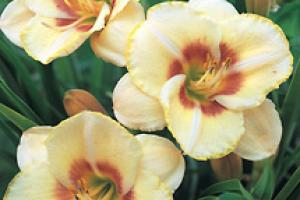


Epimedium rubrum
Red Barrenwort
Photo of Epimedium rubrum - Red Barrenwort
No photo for the moment for Epimedium rubrum - Red Barrenwort

Please note: You must be the owner of the posted photo and it must not be copyrighted.
Things You Must Knows cannot be held responsible for photos posted in violation of this rule
Common Name:
Plant Type:
Flower color:
Foliage color:
GreenSun (From 0 to 5):
Water (From 0 to 5):
Maximum temperature:
Minimum temperature:
Maximum height:
Maximum width:
Red Barrenwort (Epimedium rubrum) - Description
E. x rubrum is a hybrid between E. alpinum and E. grandiflorum. It bears clusters of flowers with crimson inner sepals, pale yellow or white petals.
Red Barrenwort (Epimedium rubrum) - Blooming
In spring, plants produce loose spikes of small, waxy flowers like tiny columbines in pink, red, red-orange, creamy yellow, or white. Flowers have four spurred or hooded petals and eight sepals, four inner and four small outer ones.
Red Barrenwort (Epimedium rubrum) - Growth
Evergreen and decidous, rhizomatous perennials. Leaves last late into the year even in deciduous types. Usable as a groundcover under shrubs and trees, prefers partial shade but will tolerate heavy shade. Also makes a nice addition to a border. Smaller species are appropriate for rock gardens.
Red Barrenwort (Epimedium rubrum) - Planting
Divide large clumps in spring or fall by severing tough roots. Adaptable to containers. Can also root rhizome cuttings, initially under glass until threat of frost passes. Division entails propagating a plant by splitting it into 2 or more parts. Each part has its own root system and more than one shoot or dormant bud.
Red Barrenwort (Epimedium rubrum) - Pest
Vine weevil. Another problem is mosaic virus.
Red Barrenwort (Epimedium rubrum) - Interesting facts
The majority of Bishop's Hats have four-petaled spider-like flowers in spring, resembling a bishop's mitre, and the roots are sometimes believed to be aphrodisiacs.
Red Barrenwort (Epimedium rubrum) - Soil and irrigation
Water moderately. Does best in fertile, well-draining soil that is humus-rich. Once established, many are drought tolerant.