

Eucalyptus sideroxylon
Red Ironbark
Photo of Eucalyptus sideroxylon - Red Ironbark
No photo for the moment for Eucalyptus sideroxylon - Red Ironbark

Please note: You must be the owner of the posted photo and it must not be copyrighted.
Things You Must Knows cannot be held responsible for photos posted in violation of this rule
Common Name:
Sun (From 0 to 5):
Water (From 0 to 5):
Maximum temperature:
Minimum temperature:
Maximum height:
Maximum width:
Red Ironbark (Eucalyptus sideroxylon) - Description
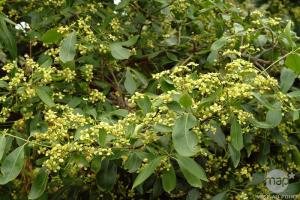
E. sideroxylon bears slim blue-green leaves, which turn bronze in the winter. It has a furrowed, nearly black trunk. It bears fluffy light pink to crimson flowers in clusters, which bloom mainly from fall to late spring.
Red Ironbark (Eucalyptus sideroxylon) - Blooming
Some species of Eucalyptus have showy flowers that appear at different times of year.
Red Ironbark (Eucalyptus sideroxylon) - Growth
The genus, Eucalyptus, is a huge genus with roughly 600 species which gives it a variety of different growing needs; however, they primarily need full sun. All species are evergreen, but they may come as small shrubs or huge trees. Many Eucalypts can withstand windy and dry climates, which makes them great candidates for windbreaks. In less hardy areas, grow plants in a cool greenhouse with a minimum temperature of 35°F (2°C). During the day, set temperatures between 41-50°F (5-10°C), and at night, keep the temperature at 36°F (2°C).
Red Ironbark (Eucalyptus sideroxylon) - Planting
When planting a Eucalyptus tree, you must know how big your tree or shrub will get. Some trees can grow as much as 10' per year and can get rather large. Make sure your Eucalyptus has plenty of room to grow wherever it may be planted.
Red Ironbark (Eucalyptus sideroxylon) - Pest
Since Eucalyptus trees and shrubs are native to only Australia, no pests existed in America until 1984 when the Eucalyptus long-horned beetle was observed in Southern California. Since then several natural predators of the pest have been introduced from Australia.
Red Ironbark (Eucalyptus sideroxylon) - Interesting facts
Although the tallest living tree today is a Coastal Redwood (Sequoia sempervirens) at 378' tall found in Mendocino County, reports claim that the tallest living tree in the historic past was a Eucalyptus. Eucalyptus regnans can grow very tall and one was measured in 1872 to be 435' tall. It was estimated that before it died, it reached over 500'.
Red Ironbark (Eucalyptus sideroxylon) - Soil and irrigation
Eucalyptus trees and shrubs are known to be drought tolerant. In fact over watering can cause foliar chlorosis for many species. Grows best in neutral to slightly acidic soil that is fertile and remains constantly moist.