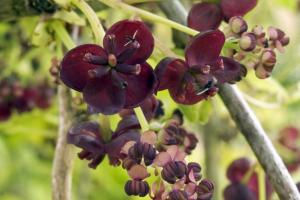


Magnolia sieboldii
Siebold's Magnolia
Photo of Magnolia sieboldii - Siebold's Magnolia
No photo for the moment for Magnolia sieboldii - Siebold's Magnolia

Please note: You must be the owner of the posted photo and it must not be copyrighted.
Things You Must Knows cannot be held responsible for photos posted in violation of this rule
Common Name:
Sun (From 0 to 5):
Water (From 0 to 5):
Maximum temperature:
Minimum temperature:
Siebold's Magnolia (Magnolia sieboldii) - Description
Magnolia sieboldii, Siebold's Magnolia, also known as Oyama Magnolia, is a species of Magnolia native to eastern Asia in China, Japan, and Korea. It is named after the German doctor Philipp Franz von Siebold (1796–1866).
Siebold's Magnolia (Magnolia sieboldii) - Blooming
Magnolia flowers come in white, pink, red, purple, or yellow followed by cone-like fruits bearing colorful seeds. Some species take many years to flower.
Siebold's Magnolia (Magnolia sieboldii) - Growth
Grows best in sun or partial shade. Mulch in early spring, especially where soils are dry. Late frost is a threat to early bloomers.
Siebold's Magnolia (Magnolia sieboldii) - Planting
Sow seeds in fall in a seedbed. Propagate with cuttings: greenwood or semi-ripe cuttings for deciduous species in summer and semi-ripe cuttings for evergreens in early fall. Can also graft in winter.
Siebold's Magnolia (Magnolia sieboldii) - Pest
Snails, weevils, thrips, scale insects, and planthoppers. Magnolia is also prone to spot anthracnose, bacterial leaf spot, canker, butt rot, canker, fungal spots, anthracnose, and dieback, all of which are quite common.
Siebold's Magnolia (Magnolia sieboldii) - Interesting facts
The flowers are sometimes borne before the leaves. M. campbellii can takes up to 30 years to flower.
Siebold's Magnolia (Magnolia sieboldii) - Soil and irrigation
Magnolias prefer soil that is rich, well-draining, and slightly acidic. Species also require regular watering.