Wisteria sinensis
Chinese Wisteria
Photo of Wisteria sinensis - Chinese Wisteria
No photo for the moment for Wisteria sinensis - Chinese Wisteria

Please note: You must be the owner of the posted photo and it must not be copyrighted.
Things You Must Knows cannot be held responsible for photos posted in violation of this rule
Common Name:
Foliage color:
GreenSun (From 0 to 5):
Water (From 0 to 5):
Maximum temperature:
Minimum temperature:
Maximum height:
Maximum width:
Chinese Wisteria (Wisteria sinensis) - Description
Chinese Wisteria is one of the legendary plants in the landscape industry. Gorgeous and adaptable it can be used in many ways. Most popular it is used as a woody vine to cover arbors or patio covers so the lovely draping grape like clusters can dangle majestically from the lime green foliage. It can also be trained into a nice specimen tree that can give repetitive flushes of blooms all season long after the initial large push in the spring time. Nothing beats the look of an old wisteria vine in full bloom in the early springtime. It originally made it to the united states in 1816 and there are several specimens that are well over 100 years old out there. Not bad for a member of the pea family!
Chinese Wisteria (Wisteria sinensis) - Blooming
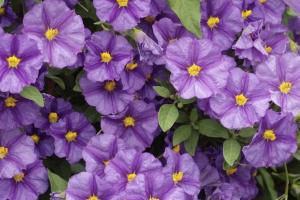
The flowers of Wisteria attract bees as pollinators. The flowers are fragrant, pea-like and come in colors of blue, pink or white. Followed by bean-like green seed pods.
Chinese Wisteria (Wisteria sinensis) - Growth
Twining, woody, deciduous climbers. Wisterias can get rather large. They grow as a twining, woody vine. They are very adaptable in the style of growth. They can be trained to grow as a tree, shrub or vine. Grows best in full sun or partial shade.
Chinese Wisteria (Wisteria sinensis) - Planting
The best way to start a Wisteria is by purchasing a grafted Wisteria as seedlings may not flower for many years. Can also propagate from basal cuttings from side shoots in summer. Conduct layering in fall or grafting in winter.
Chinese Wisteria (Wisteria sinensis) - Pest
Leaf miners, scale insects, Japanese beetle, aphids, and mealybugs. Wisteria is also prone to dieback, leaf spots, virus diseases, and crown gall.
Chinese Wisteria (Wisteria sinensis) - Interesting facts
Wisteria is native to the moist woodlands and streambanks of China, Korea, Japan, and the Central and Southern United States. All parts of Wisteria are toxic and can cause stomach discomfort upon consumption.
Chinese Wisteria (Wisteria sinensis) - Soil and irrigation
Wisterias are not fussy about soil, just as long as it drains well.