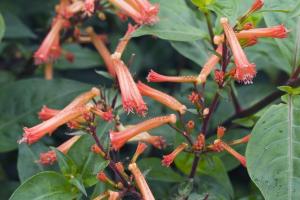
Agapanthus praecox
Common Agapanthus
Photo of Agapanthus praecox - Common Agapanthus
No photo for the moment for Agapanthus praecox - Common Agapanthus

Please note: You must be the owner of the posted photo and it must not be copyrighted.
Things You Must Knows cannot be held responsible for photos posted in violation of this rule
Common Name:
Plant Type:
Flower color:
Foliage color:
GreenSun (From 0 to 5):
Water (From 0 to 5):
Maximum temperature:
Minimum temperature:
Common Agapanthus (Agapanthus praecox) - Description
Agapanthus praecox (Common Agapanthus, Blue Lily, African Lily, or Lily of the Nile) is a native of the Cape of Good Hope in South Africa. Local names for this species include agapant, bloulelie, isicakathi and ubani. Most of the cultivated plants of the genus Agapanthus are hybrids or cultivars of this species.
Common Agapanthus (Agapanthus praecox) - Blooming
Blooms in the summer with tall stems that end in clusters of flowers. Blooms can be white or various shades of blue to purple. Though Agapanthus are relatively drought tolerant, be sure to water regularly in the spring and summer as failure to do so can impede blooming.
Common Agapanthus (Agapanthus praecox) - Growth
Does well with full sun or partial shade. Thrives in climates that have mild summers. Divide every 5 or 6 years.
Common Agapanthus (Agapanthus praecox) - Planting
Propagate by dividing rhizomes, tubers, or bulbs (including offsets). You can grow from seed, but the resulting plant often doesn't resemble the parent.
Common Agapanthus (Agapanthus praecox) - Pest
Susceptible to snails and slugs.Although all species of the genus are considered deer resistant, they are not deer proof. Deer tend to leave the foliage alone, but prefer to eat the flowers.
Common Agapanthus (Agapanthus praecox) - Interesting facts
Agapanthus are native to South Africa. There are several hundred cultivars and hybrids cultivated as garden and landscape plants.
Common Agapanthus (Agapanthus praecox) - Soil and irrigation
Does best with loamy soil, but tolerates heavy soil. Established plants can handle poor soils, and even salty coastal conditions. Agapanthus takes little to regular water, but be sure to reduce watering during the winter dormant season. Established plants are fairly drought tolerant, but lack of water during spring and summer can impede blooming.