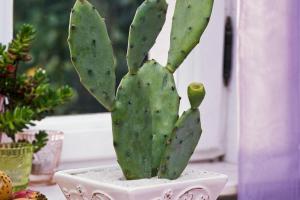
Opuntia chlorotica
Pancake Prickly Pear
Photo of Opuntia chlorotica - Pancake Prickly Pear
No photo for the moment for Opuntia chlorotica - Pancake Prickly Pear

Please note: You must be the owner of the posted photo and it must not be copyrighted.
Things You Must Knows cannot be held responsible for photos posted in violation of this rule
Common Name:
Sun (From 0 to 5):
Water (From 0 to 5):
Maximum temperature:
Minimum temperature:
Pancake Prickly Pear (Opuntia chlorotica) - Description
Opuntia chlorotica is a species of plant in the Cactaceae family. It is a species of prickly pear native to the southwestern United States and northern Mexico. Its common names include pancake prickly pear, flapjack prickly pear and dollarjoint prickly pear. This cactus is bluish-green and manifests a bushy to erect form that may attain a height of two meters or more.
Pancake Prickly Pear (Opuntia chlorotica) - Blooming
Showy bowl shaped flowers in summer.
Pancake Prickly Pear (Opuntia chlorotica) - Growth
Succulent, perennial cacti. Fleshy branches that are flat and padded or rounded. Barbed spines may be very large or small and hair like. Fruits are edible. Opuntia grows best in full sun.
Pancake Prickly Pear (Opuntia chlorotica) - Planting
Propagate by dividing clumps in spring or rooting individual flattened pads.
Pancake Prickly Pear (Opuntia chlorotica) - Pest
Mealybugs and scale insects. Other problems include cladode rots, black spot, bacterial soft rot, viruses, and zonate leaf spot.
Pancake Prickly Pear (Opuntia chlorotica) - Interesting facts
Opuntia is native to the very dry regions of the Americas. The bristles can cause serious aggravation of the skin upon contact. Before consuming prickly pears, the small spines on the surface must thoroughly be removed. The fruits are used to produce distilled spirits in some countries. Prickly pears also contain a number of alkaloids and psychoactive compounds, some with medicinal significance.
Pancake Prickly Pear (Opuntia chlorotica) - Soil and irrigation
Gritty soil or very well-drained organic soil. Wet soil, especially in winter, is fatal.