

Solanum lycopersicum 'Amish Paste'
Tomato
Photo of Solanum lycopersicum 'Amish Paste' - Tomato
No photo for the moment for Solanum lycopersicum 'Amish Paste' - Tomato

Please note: You must be the owner of the posted photo and it must not be copyrighted.
Things You Must Knows cannot be held responsible for photos posted in violation of this rule
Common Name:
Flower color:
Foliage color:
GreenSun (From 0 to 5):
Water (From 0 to 5):
Maximum temperature:
Minimum temperature:
Maximum height:
Maximum width:
Tomato (Solanum lycopersicum 'Amish Paste') - Description
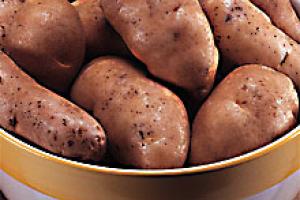
Originating from the state of Wisconsin this plant produces deep red, 8oz. acorn-shaped fruits with thick flesh and few seeds, which are delicious fresh or cooked. Amish Paste plants are very sprawling and indeterminate in growth nature. So it definitely needs staking to maximize yields. Look for medium to large harvests of these old reliable tomatoes. Does great in a greenhouse, but may lose some of its juicy tomato flavor and become a bit bland. Lot's of marinara sauce in your future with a couple of these in your kitchen garden. Takes approximately 82 days to harvest this tasty sauce tomato.
Tomato (Solanum lycopersicum 'Amish Paste') - Blooming
Small yellow blooms should start appearing very soon with tomatoes. If these fail to appear or start dropping off with out forming fruit you may have an excess of nitrogen in the soil. You can flush the soil at this point to wash out some of the soluble nitrogen salts or use a fertilizer specific to tomatoes or with an emphasis on phosphorus and potassium. ie.. 2-10-10 or 0-5-2 water soluble fertilizer should work great.When in bloom if your plants are indoors (greenhouse) or if you have a lack of pollinators (Bees!) in your area you may need to hand pollinate with a small paintbrush or similar. Just dab one flower center and move to the next gently brushing its center and just keep doing this for as many flowers as you want.
Tomato (Solanum lycopersicum 'Amish Paste') - Growth
In hot climates small, fragile seedlings should be given some shade to protect them from sunburn. Although tomatoes require a minimum 6 hours of full sun for a hearty fruit set, it is recommended that they receive as much sun as possible to promote better flavor (generally 8 hours).Caging or trellising is recommended for indeterminate tomatoes (these are tomatoes that continuously grow and are not bushy). This is to promote the plants to grow vertically, which promotes higher crop yields and better spacing abilities.
Tomato (Solanum lycopersicum 'Amish Paste') - Planting
Sow seeds 6 weeks before the last projected frost as spring arrives. Seeds tend to germinate best when the temperatures are kept between 75°F and 85°F. Tomatoes can be transplanted as well, so sowing seeds in pots with rich potting soil that can be moved during times of frost or extreme cold to a milder location is also recommended. These pot-grown tomatoes can be transplanted into the ground outside 1 to 2 weeks after the average last frost date in your region.Plant more mature transplants so that a minimum of 2" of topsoil covers the main stem. This will promote root initiation along the main stem and will provide better support from wind.
Tomato (Solanum lycopersicum 'Amish Paste') - Pest
Prone to tomato hornworms. Hornworms are green in color and have white diagonal stripes down their sides. They also will have a "horn" on their tail end. These are the larvae of a large moth that lays its eggs on the underside of the leaves. The larval stage of this insect is the one that can cause harm to the plant as they are voracious foliar feeders. They can eat enough leaf material to seriously affect the overall yield of the plants.Tomatoes are also prone to wilts and the tobacco mosaic virus. Immediately remove any infected leaves.
Tomato (Solanum lycopersicum 'Amish Paste') - Interesting facts
Tomatoes used to be classified under the botanical name Lycopersicon esculentum. Research has provided evidence showing that tomatoes should be classified under the genus Solanum, which is where they now reside as Solanum lycopersicum. Tomatoes are generally thought to be synonymous with Italian cooking, however, tomatoes are not native to the Mediterranean at all. Tomatoes are native to South America and did not reach Italy until the 1550's, which causes one to wonder what Italians ate before the arrival of this South American fruit. (Yes, tomatoes are technically fruits).When Europeans were first introduced to the tomato, many thought that they were poisonous since they are in the deadly nightshade family. Unripe tomatoes have compounds in them that will cause an upset stomach. Luckily these compounds can be neutralized via a heat treatment, which is why eating fried green tomatoes will not cause any discomfort.
Tomato (Solanum lycopersicum 'Amish Paste') - Soil and irrigation
Does best with soils high in organic matter. Very important to have well-drained soils, but would be best to have some level of water retention. Consistently moist soils help to prevent blossom end rot as this will provide the roots with the ability to better absorb nutrients. Mulching is a great way to promote moisture retention in the soil.