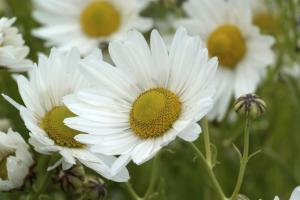


Trillium grandiflorum
Large Flowered Trillium
Photo of Trillium grandiflorum - Large Flowered Trillium
No photo for the moment for Trillium grandiflorum - Large Flowered Trillium

Please note: You must be the owner of the posted photo and it must not be copyrighted.
Things You Must Knows cannot be held responsible for photos posted in violation of this rule
Common Name:
Foliage color:
GreenSun (From 0 to 5):
Water (From 0 to 5):
Maximum temperature:
Minimum temperature:
Maximum height:
Maximum width:
Large Flowered Trillium (Trillium grandiflorum) - Description
Trillium grandiflorum (common names white trillium, great white trillium, white wake-robin, French trille blanc) is a species of flowering plant in the family Melanthiaceae. A monocotyledonous, herbaceous perennial, it is native to eastern North America, from northern Quebec to the southern parts of the United States through the Appalachian Mountains into northernmost Georgia and west to Minnesota.
Large Flowered Trillium (Trillium grandiflorum) - Blooming
Wake Robins bloom in early spring. For better more robust flowering, the plants require some winter chill. Some species (T. erectum) have odd smelling flowers.
Large Flowered Trillium (Trillium grandiflorum) - Growth
Rhizomatous, deciduous perennial. Grows best in shady, woodsy sites. Plants increase laterally via underground rhizomes. In mid- to late summer, the shoots will die back to the ground. After planting, leaves of Trillium often won't appear until the second spring. Plants will take 5-7 years to reach flowering size. Works well in a moist, shady border. Trillium also makes a nice addition to a woodland garden. Smaller species, such as T. nivale and T. rivale, are appropriate for a rock garden (grown in the pockets).
Large Flowered Trillium (Trillium grandiflorum) - Planting
Sow seeds when ripe in a cold frame that is shaded. Rhizomes can be broken apart and divided to propagate more plants.
Large Flowered Trillium (Trillium grandiflorum) - Pest
Slugs and snails are a threat to young plants. Other issues include smut, rust, and fungal spots, which occur occasionally.
Large Flowered Trillium (Trillium grandiflorum) - Soil and irrigation
Does best in humus-rich, deep soil that is well-draining yet kept moist and acidic to neutral in pH.