

Abelia chinensis
Chinese Abelia
Photo of Abelia chinensis - Chinese Abelia
No photo for the moment for Abelia chinensis - Chinese Abelia

Please note: You must be the owner of the posted photo and it must not be copyrighted.
Things You Must Knows cannot be held responsible for photos posted in violation of this rule
Common Name:
Sun (From 0 to 5):
Water (From 0 to 5):
Maximum temperature:
Minimum temperature:
Maximum height:
Maximum width:
Chinese Abelia (Abelia chinensis) - Description
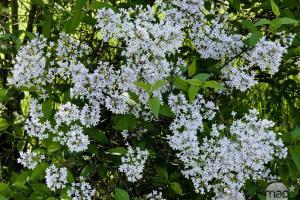
Chinese Abelias, like their name indicates, are native China. They are known for their fragrant flowers that are white with pink tint.
Chinese Abelia (Abelia chinensis) - Blooming
This plant is beautiful throughout the year, as flowering occurs prolifically in summer and early fall, with sporadic blooming throughout the rest of the year. Individually, the flowers are small but so abundant that they are still showy. Blossoms are tubular or bell shaped, and are generally pink or white, though some varieties can be lavender (A. sherwoodii) or reddish purple (Mexican Abelia). Deadhead regularly to prolong flowering.
Chinese Abelia (Abelia chinensis) - Growth
Abelias can be evergreen or deciduous and they do best in full sun. Different species yield different sizes. Both height and width vary, but width tends to be larger than height. The smallest varieties ('panache', or 'Silver Anniversary', and 'prostrata', both of the 'grandiflora' subspecies) grow to an average height of between 1.5' and 2', whereas the largest ('floribunda' species) can stand between 10' and 12' tall.
Chinese Abelia (Abelia chinensis) - Planting
Grows best in full sun as it enhances flower production, yet can tolerate limited shade. Plant it 2-3' apart to form a natural or pruned hedge. Ideal climate zone varies by species.
Chinese Abelia (Abelia chinensis) - Pest
No serious disease or insect problems.
Chinese Abelia (Abelia chinensis) - Interesting facts
Abelias are named for Dr. Clarke Abel (1780-1826) who was Chief Medical Officer and Naturalist to Lord Amherst's Embassy to China (1816-1817). Native to Asia (Japan, China and west to the Himalayas) and Mexico, they are used for landscaping, and are great visual barriers, shrub borders and space dividers; some species even work well as ground covers. Genera Abelia consists of three subspecies: 1) chinensis (deciduous, native to China), 2) floribunda (native to Mexico), and 3) grandiflora (Chinese hybrid).
Chinese Abelia (Abelia chinensis) - Soil and irrigation
Abelias do well with regular water. It prefers moist, slightly alkaline, organically rich soils which drain well, though it can handle average soil. Abelia can tolerate moderate drought once established, it doesn't do well with a high salt concentration in the soil.