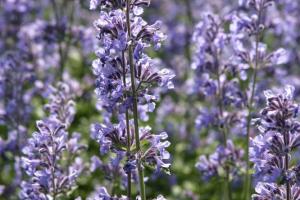


Camassia cusickii
Camass
Photo of Camassia cusickii - Camass
No photo for the moment for Camassia cusickii - Camass

Please note: You must be the owner of the posted photo and it must not be copyrighted.
Things You Must Knows cannot be held responsible for photos posted in violation of this rule
Common Name:
Flower color:
Sun (From 0 to 5):
Water (From 0 to 5):
Maximum temperature:
Minimum temperature:
Maximum height:
Maximum width:
Camass (Camassia cusickii) - Description
Camassia cusickii, common name Cussick's camas, is a species of plant in the Asparagaceae family (subfamily Agavoideae). It is native to parts of North America. It has linear leaves with parallel venation and flowers in parts of three. The flowers are usually ice blue or baby blue in color, although they can be various shades of blue, cream and white.
Camass (Camassia cusickii) - Blooming
Star like, slender-petaled, violet-blue to white blossoms are carried on spikes in late spring, early summer.
Camass (Camassia cusickii) - Growth
Plants grown from rounded, tunicate bulbs and produce grassy clumps of narrow, lance-shaped 1-2 foot long leaves. Grows best in sun or partial shade. Works well in a border or a wild flower meadow. Does good in containers. Flowers, long-lasting, as suitable for cutting.
Camass (Camassia cusickii) - Planting
Plant in moist situation, fairly heavy soil, where bulbs can remain undisturbed for many years. Bulbs should be 4 inches deep and 6 inches apart. Plant after weather cools in fall.
Camass (Camassia cusickii) - Pest
Prone to fungal leaf spots and leaf smut.
Camass (Camassia cusickii) - Interesting facts
At one time, the bulbs of C. quamash were a major food source for Native Americans.
Camass (Camassia cusickii) - Soil and irrigation
Ample water during growth and bloom. Does best in rich, moist soil with good drainage. Make sure soil does not become waterlogged.