Daphne burkwoodii 'Carol Mackie'
Burkwood Daphne
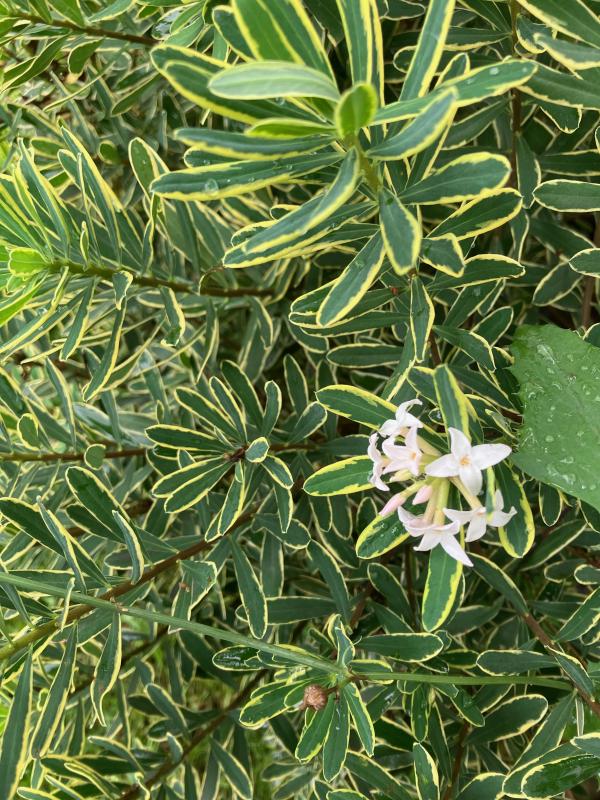
Photo of Daphne burkwoodii 'Carol Mackie' - Burkwood Daphne

Please note: You must be the owner of the posted photo and it must not be copyrighted.
Things You Must Knows cannot be held responsible for photos posted in violation of this rule
Common Name:
Foliage color:
Variegated Green YellowSun (From 0 to 5):
Water (From 0 to 5):
Maximum temperature:
Minimum temperature:
Maximum height:
Maximum width:
Burkwood Daphne (Daphne burkwoodii 'Carol Mackie') - Description
Daphnes are native to Asia, Europe, and north Africa. They are noted for their scented flowers and poisonous berries. Flowering is in late winter or very early spring.
Burkwood Daphne (Daphne burkwoodii 'Carol Mackie') - Blooming
Small white to pink flowers in late winter to early spring with intensely sweet fragrance. Followed by white, pink, orange, red, or purple-black fruits. Fruits can be fleshy or dry. Most species produce fleshy fruit. An example of a species of Daphne with dry fruit is D. genkwa, native to China. The ovoid fruits are grayish white in color.
Burkwood Daphne (Daphne burkwoodii 'Carol Mackie') - Growth
Small, woody shrubs with deciduous or evergreen, simple, alternate leaves. The brightly colored, succulent fruits are very poisonous, even lethal, if eaten. Full sun or partial shade. Make sure to mulch regularly to keep roots cool.Grow Daphne in a rock garden or shrub border. Also makes a nice addition to a woodland.
Burkwood Daphne (Daphne burkwoodii 'Carol Mackie') - Planting
Seeds need cold treatment. Also propagatable by layering in spring or taking soft to semi-hard cuttings. Layering is a propagation method where a stem is pegged to the soil while still attached to the parent plant. This process induces rooting.
Burkwood Daphne (Daphne burkwoodii 'Carol Mackie') - Pest
Aphids and scale insects. Other problems include wilt, crown and root rot, twig blight, fasciation, tobacco ringspot virus, and Southern blight.
Burkwood Daphne (Daphne burkwoodii 'Carol Mackie') - Interesting facts
All parts of Daphne are very toxic. The sap may also aggravate the skin upon contact. Mature species of Daphne are known to die suddenly. Reasons for this are unclear.
Burkwood Daphne (Daphne burkwoodii 'Carol Mackie') - Soil and irrigation
Fertile, well-amended soil that stays cool and moist at roots. Most species do best in slightly alkaline to slightly acidic soil.
Daphne burkwoodii 'Carol Mackie' - Burkwood Daphne - Photos