

Sorbus domestica
Service Tree
Photo of Sorbus domestica - Service Tree
No photo for the moment for Sorbus domestica - Service Tree

Please note: You must be the owner of the posted photo and it must not be copyrighted.
Things You Must Knows cannot be held responsible for photos posted in violation of this rule
Common Name:
Flower color:
Foliage color:
GreenSun (From 0 to 5):
Water (From 0 to 5):
Maximum temperature:
Minimum temperature:
Maximum height:
Maximum width:
Service Tree (Sorbus domestica) - Description
Sorbus domestica (service tree, or sometimes true service tree to distinguish it from the wild service tree; syn. Cormus domestica (L.) Spach) is a species of Sorbus native to western, central and southern Europe, northwest Africa (Atlas Mountains), and southwest Asia (east to the Caucasus). It is a deciduous tree growing to 15–20 m (rarely to 30 m) tall with a trunk up to 1 m diameter, though can also be a shrub 2–3 m tall on exposed sites.
Service Tree (Sorbus domestica) - Blooming
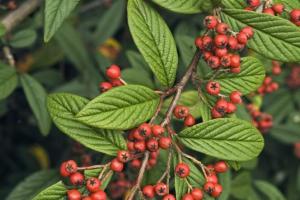
In late spring, 3-inch, lacy clusters of white flowers bloom above the foliage followed by white, yellow, orange, red, or brown berries. S. aria flourishes in dry, and alkaline or acidic soil.
Service Tree (Sorbus domestica) - Growth
Deciduous trees and shrubs. Leaves are variable, from compound to simple. Has showy small red fruits in clusters in summer to late fall. Tree needs winter chill. Grows best in full sun or light shade. Tolerates atmospheric pollution. Trees work well in a small garden, wild or woodland.
Service Tree (Sorbus domestica) - Planting
Propagate from the seed. Sow in fall in containers in a cold frame (for protection and to ensure hardiness). Can also propagate from greenwood cuttings, but it will take a while for some plants to root.
Service Tree (Sorbus domestica) - Pest
Sawfly, borers, scale insects, and aphids. Sorbus is also prone to fireblight, powdery mildew, dieback, wood rot, and anthracnose.
Service Tree (Sorbus domestica) - Interesting facts
Sorbus is cultivated for its leaves that often color nicely in fall. Raw fruits are slightly toxic, but cooking makes them edible.
Service Tree (Sorbus domestica) - Soil and irrigation
Moist, well-drained acidic to alkaline soil. Keep roots moist and cool.